What is Interaction Geography?
How can we see the complexity of interaction in settings like museums and classrooms? What do embodied movement transcription tools even look like? How can manual and AI-assisted methods be integrated in ethical ways to interpret diverse data — or speculate about spaces that don't yet exist?
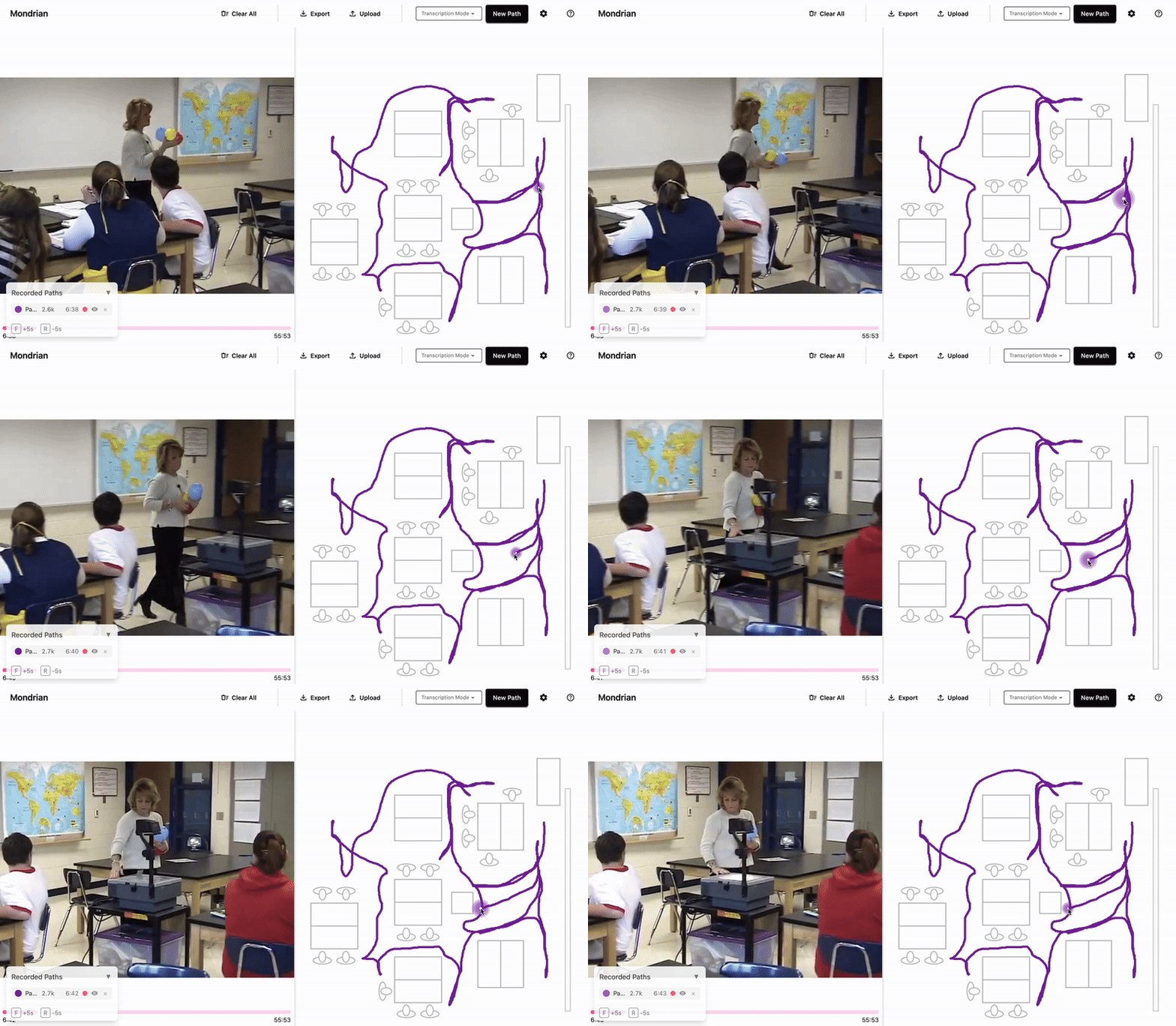
Interaction Geography is a method for exploring how people and things move and interact across space and time in indoor or outdoor settings. It combines open-source tools for embodied transcription with dynamic visualization that layers movement paths with video, audio, conversation transcripts, and other data sources. If you already have movement data from indoor sensors, computer vision, or GPS, you can skip transcription entirely and jump straight to visualization.
The approach bridges Hägerstrand's time geography with qualitative interaction analysis methods. It was originally developed to study visitor interaction in museums and has since been applied across classrooms, early childhood settings, virtual reality environments, musical performances, and outdoor public spaces.
Who It's For
Researchers
How do people interact in complex settings?
Explore movement, conversation, and participation with rich audiovisual data.
Educators
How do students and teachers move and interact during a lesson?
Reflect on your own practice and see classroom dynamics unfold across space and time.
Designers
How do people navigate built environments — and how might they move through spaces that don't yet exist?
Explore and speculate with real and generated data.
Public Spaces
How do visitors experience a museum, gallery, or public space?
Understand flow, engagement, and interaction across entire environments.
How It Works
Movement is manually traced or automatically captured, then visualized alongside video, conversation transcripts, and other data across space and time